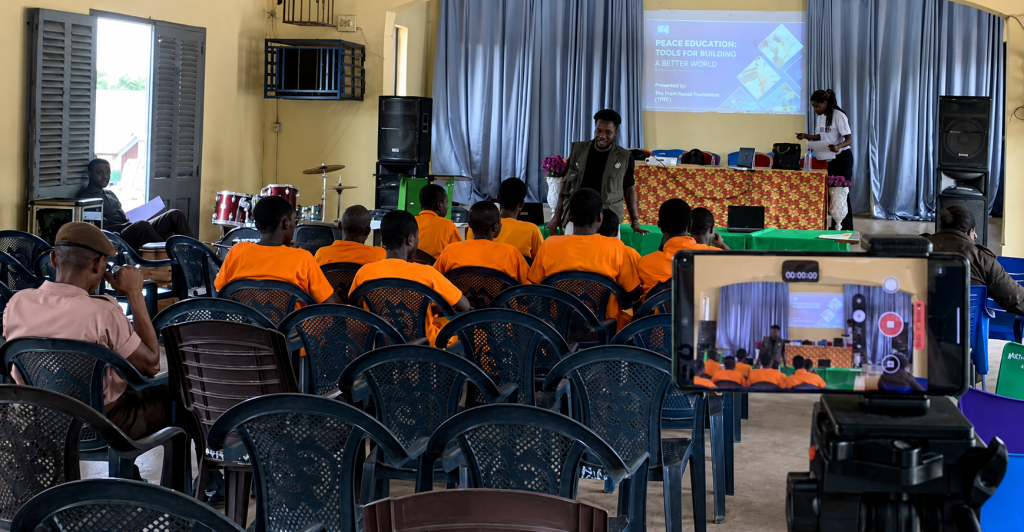
Peace is more than the absence of conflict; it is a mindset, a practice, and a foundation for transformation. Over the course of five weeks, learners participating in the Peace Education Program organized by The Prem Rawat Foundation trainers in Ghana experienced a journey of reflection, learning, and personal growth that highlighted the true meaning and value of peace in everyday life.
The program began in the last week of March and was held every Saturday, bringing together committed participants who are preparing to become trainers and facilitators at Reduce Recidivism Ghana. As an organization focused on supporting juveniles through rehabilitation, mentorship, and empowerment, the training formed an important step toward equipping future facilitators with the tools needed to positively impact vulnerable young people.
Throughout the sessions, participants explored how peace can be cultivated through appreciation for life, self, and others. This appreciation encouraged individuals to recognize their inner strength, especially during moments of difficulty and uncertainty. As participants reflected more deeply, they developed greater self-awareness, which in turn brought clarity about their thoughts, emotions, and personal values. This clarity created room for deeper understanding — both of themselves and of the people around them — fostering empathy, compassion, and mutual respect.
Through this understanding, learners were able to better appreciate the importance of dignity and the value of treating every individual with humanity and respect. The discussions further emphasized the power of choice, reminding participants that their decisions and responses shape their experiences and relationships. By making conscious and positive choices, individuals are able to nurture hope, even in challenging circumstances. Ultimately, the program revealed how hope, when combined with appreciation and inner peace, can lead to true contentment — a sense of fulfillment and balance that empowers individuals to positively influence their communities and the lives of others.
The learning environment encouraged open dialogue and thoughtful reflection, allowing learners to connect the lessons not only to their own lives but also to the challenges faced by juveniles within society.
One of the most impactful aspects of the program was its emphasis on practical application. The sessions encouraged empathy, emotional intelligence, patience, and peaceful conflict resolution — qualities that are essential for anyone working with young people in rehabilitation and support programs. Participants learned that peace education is not simply theoretical knowledge, but a valuable life skill capable of influencing relationships, decision-making, and community development.
The consistency of the weekly Saturday sessions also contributed greatly to the effectiveness of the program. Each meeting created a safe and engaging space for continuous learning and personal development. By the conclusion of the five-week training, learners had gained greater confidence in their ability to guide, mentor, and support others through compassion and understanding.
For many participants, the Peace Education Program served as both a personal and professional transformation experience. It strengthened the belief that meaningful social change begins within individuals and expands outward into communities. As these learners continue their journey toward becoming trainers under Reduce Recidivism Ghana, the lessons from the program will remain a valuable foundation for helping juveniles rebuild their lives and create better futures.
This initiative demonstrates the powerful role peace education can play in rehabilitation and social reintegration. By investing in people who are committed to guiding others, programs like this contribute to stronger communities, reduced recidivism, and a more compassionate society.
Written by Pamela Tekpekuor Kudjoe