VOCATIONAL SKILLS TRAINING AT THE SENIOR CORRECTIONAL CENTRE
August 24, 2026 Reduce Recidivism Ghana 2 min read
Our recent outreach program at the Senior Correctional
Centre marked a truly meaningful journey, seamlessly blending practical skills
with deep emotional support. Spread across two distinct days, the initiative
began with hands-on creative training and evolved into an open, healing
conversation about personal well-being.
The journey started on Friday, July 31, 2026, with an
engaging vocational workshop centered on the art of tie-and-dye and batik
making. As the convener, I was privileged to join our dedicated team of three
lead trainers and four trainees, working alongside four juveniles and three
supportive Senior Correctional Centre officers who guided and ensured safety
throughout the day.
We began with an essential theoretical orientation,
walking everyone through critical precautionary measures long before touching
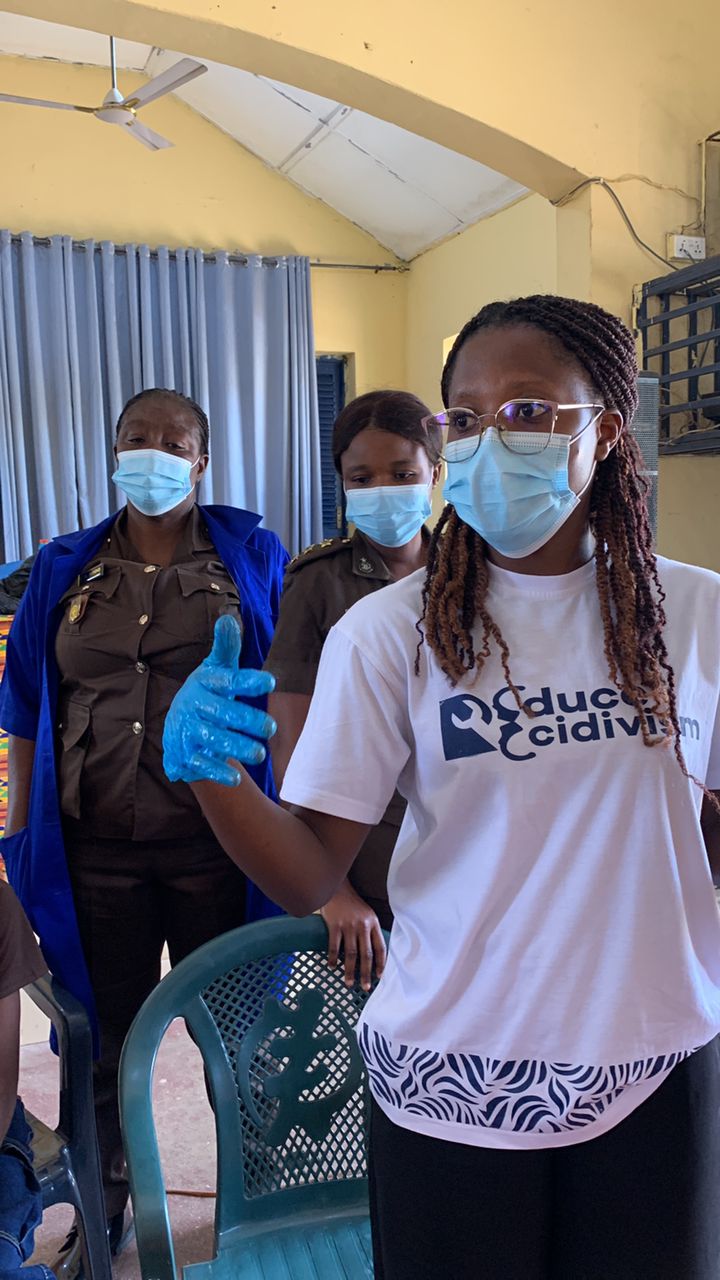
any materials. We emphasized the necessity of personal protective
equipment—such as nose masks, face shields, heavy-duty hand gloves, and protective
aprons—to ensure a safe working space. The trainers explained the fundamental
differences between tie-and-dye and batik, introducing the necessary inputs:
calico fabric, dyes, hydrosulphite, caustic soda, wax, scissors, and thread.
Transitioning into the practical phase, the energy
shifted completely. The facilitators were extraordinarily skillful, warm, and
interactive, demonstrating each step in real time
rather than just lecturing. Every participant received their own calico
material to try both techniques firsthand. We explored beautiful design
methods, including marbling and the center-swirl technique, where you hold the
middle of the fabric, rotate it tightly into a flat disc, and secure it with
thread before applying dye.
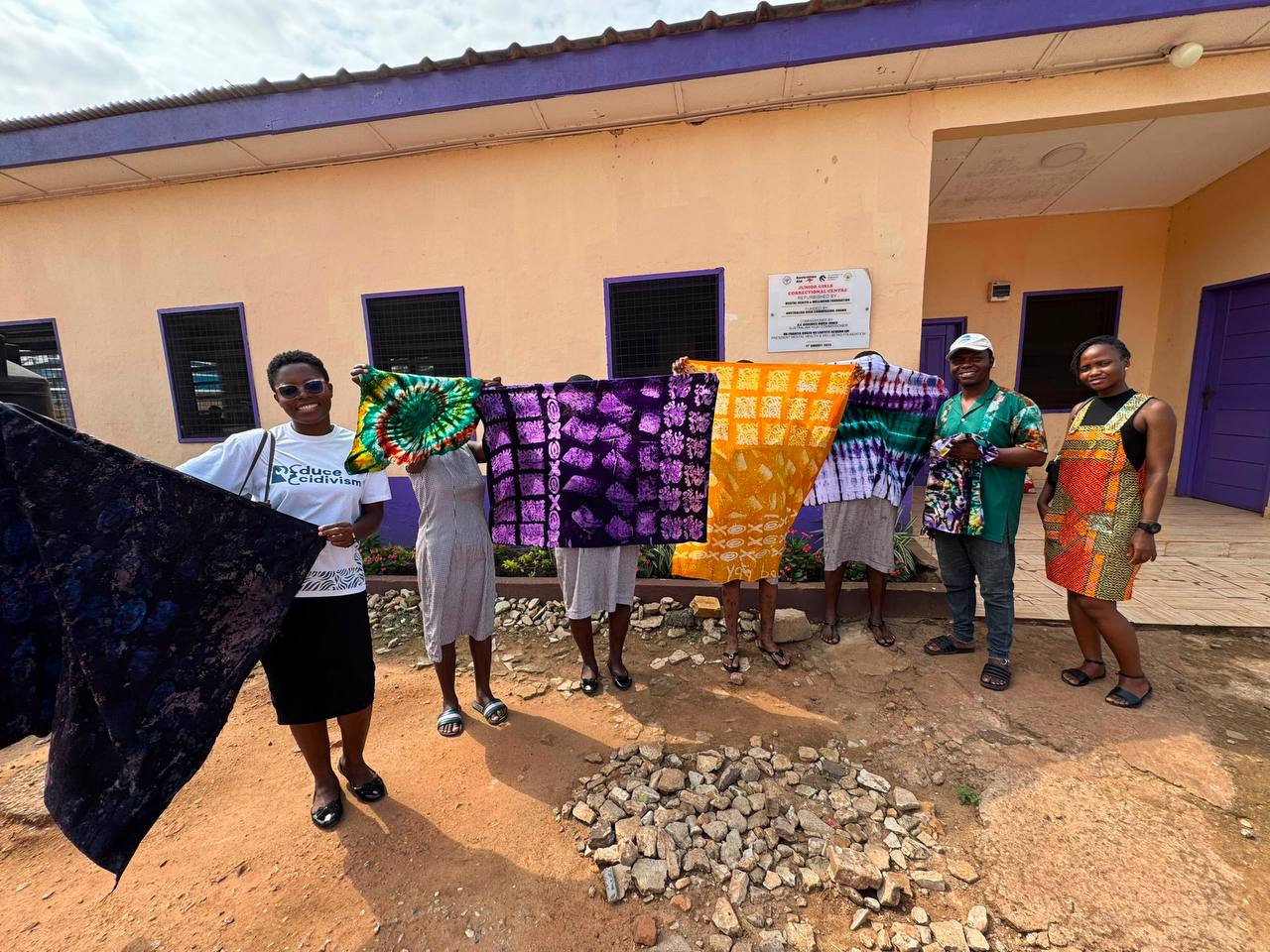
The immediate outcome was deeply moving. Excitement
filled the room as the girls saw their finished patterns unfold. In a
particularly special moment towards the end, a male officer who had missed the
session due to duty expressed his sadness at not being there. Without
hesitation, one of the juvenile girls stepped forward and confidently taught
him the entire process step-by-step. Seeing her take ownership of her new
knowledge showed just how powerful and empowering the class was.